
The Story of Famous Serial Killers and the Transformation of Criminal Investigation

The study of organized crime cases has always fascinated global criminologists. These patterns of repetitive violence leave deep psychological questions regarding criminal motives. Furthermore, exploring the track records of famous serial killers reveals how human behavioral deviations impact society. Such gruesome events often drive massive revolutions in forensic investigation. Consequently, modern law enforcement has formulated advanced psychological profiling methods. As a result, investigators can now recognize patterns before new victims emerge.
Early Traces of Serial Killer History and the Mystery of Serial Murder
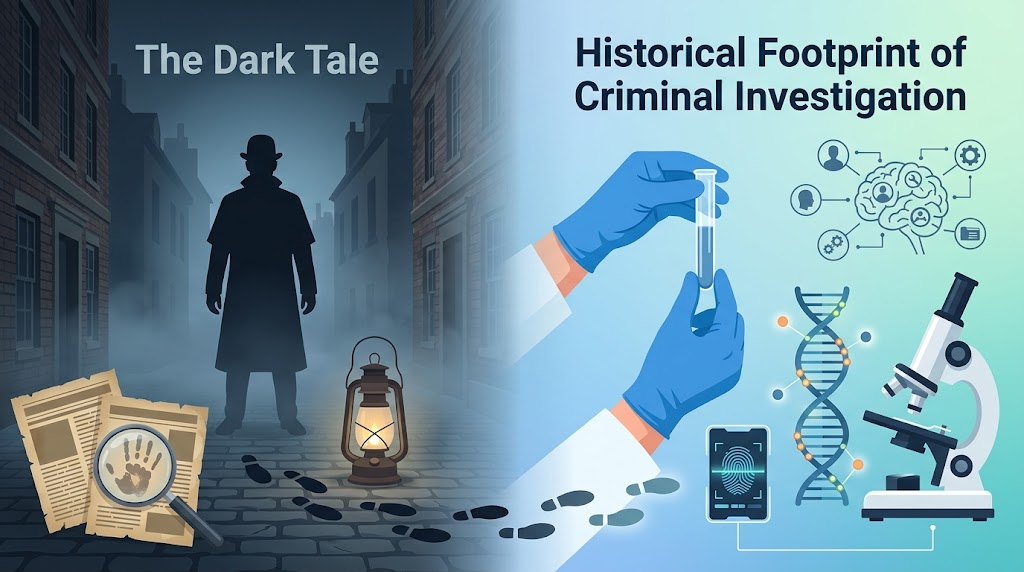
History shows that planned criminal acts existed long before modern criminology terms were coined. One legendary case starting this history is the terror of Jack the Ripper. These events occurred in late nineteenth-century London. The perpetrator spread fear across Whitechapel by targeting female sex workers with planned precision.
Interestingly, the killer’s identity remains a mystery despite decades of intensive police work. A lack of DNA testing and fingerprint analysis forced authorities to rely on eyewitnesses. Therefore, this case became a wake-up call for international police regarding physical evidence documentation. Improving scene management became essential for future justice.
Characteristics of Notorious Serial Killers and Psychological Manipulation
By the mid-twentieth century, the world witnessed killers with manipulative public personas. Many notorious figures appeared as established, educated men. In addition, they possessed charming communication skills used to deceive victims. These traits allowed them to blend seamlessly into normal society.
Dual Personality and Manipulative Charm
Ted Bundy perfectly illustrates how cold-blooded killers hide behind a handsome, law-student image. He utilized social charisma and physical deceptions, like fake casts. Furthermore, Bundy lured victims to remote locations by gaining their trust through these ruses. His ability to manipulate social norms remains a chilling case study.
Alternatively, John Wayne Gacy lived as a model citizen active in community affairs. He often wore clown costumes to entertain local children. However, beneath this generous image, Gacy hid dozens of victims under his house floors. Such cases prove that outward appearances often contrast sharply with true psychological states.
Extreme Obsessions and Social Isolation
Unlike socially manipulative figures, Jeffrey Dahmer exhibited extreme isolation and horrifying obsessions. He lured victims to his isolated apartment before committing cannibalistic acts. Consequently, his capture alerted the public to the dangers of undetected acute psychiatric disorders. Understanding these signs is now a priority for mental health professionals.
Criminal Psychology Analysis in Perpetrator Profiling
Forensic psychiatrists categorize criminals into groups based on their primary motivations. Criminal psychology distinguishes between organized and disorganized types. This classification helps investigators identify specific attack patterns. Furthermore, it narrows down potential suspect pools during active investigations.
Organized offenders plan meticulously, bringing tools and cleaning evidence from the scene. Conversely, disorganized killers act impulsively under hallucinations or uncontrollable rage. Profiling maps these differences to guide lead investigators. Consequently, these insights improve the speed of large-scale criminal cases.
Modern profiling also analyzes childhood trauma and family dysfunction. Experts even study neurological brain abnormalities in offenders. In addition, tomography scans show structural damage in parts regulating empathy. This biological evidence provides a deeper understanding of historical criminal behavior.
The Evolution of Modern Investigative Technology Thanks to Famous Serial Killers
Tragic past events forced law enforcement to reform their investigative systems completely. The Federal Bureau of Investigation created the Behavioral Analysis Unit. This unit specializes in studying the mindsets of serial criminals. Their research has become the cornerstone of modern crime-fighting.
This innovative approach created national databases integrating criminal records across jurisdictions. Authorities now have fast access to digital fingerprints and forensic DNA tracking. Furthermore, geographic location software assists in mapping crimes. Learning from famous cases has transformed criminal science into a precise discipline.
As a recommendation, criminology literacy can increase public awareness of dangerous indicators. Recognizing deviating behaviors in surroundings is a vital preventive step. Consequently, this vigilance helps stop crimes before they occur. Education remains a powerful tool for community safety.
Important Reflection on the History of Human Crime
Reviewing famous serial killer cases highlights the complexity of human psychology. These studies emphasize the need for robust legal systems. Furthermore, solving criminal mysteries proves that forensic precision can defeat terror. Therefore, we must support professional law enforcement to ensure a safe social environment.
Interesting Answers Regarding Serial Criminal Investigations
What is the main difference between a serial killer and a mass murderer?
A serial killer targets multiple victims separately with specific emotional cooling-off periods. However, a mass murderer kills many people in a single event at one location. The timeline and geography are the primary distinguishing factors. Understanding these differences helps in formulating correct response strategies.
Why has DNA testing become the most powerful weapon in solving old cases?
Biological materials like hair or blood can last decades on physical evidence. Consequently, modern genetic analysis can identify killers long after the crime. This technology has successfully closed many “cold cases” globally. It remains the most definitive tool in modern forensics.
How do police detect movement patterns of organized criminals?
Investigators use geographic mapping methods to analyze victim encounter locations, evidence disposal sites, and the suspect’s comfort zone of residence.
Do mental disorders always exempt perpetrators from criminal punishment?
Not all mental disorders exempt perpetrators from punishment, as forensic courts assess whether the suspect still possessed legal awareness and the ability to distinguish right from wrong when planning the crime.
Why is the study of criminal psychology so crucial for law enforcement?
Behavioral analysis helps investigators understand the fantasies and emotional triggers of a perpetrator. In addition, these insights aid in developing accurate interrogation strategies. This knowledge ultimately prevents more victims by speeding up the capture process. Law enforcement relies heavily on these psychological profiles.