Chilling Cold Case Mysteries That Baffle Police
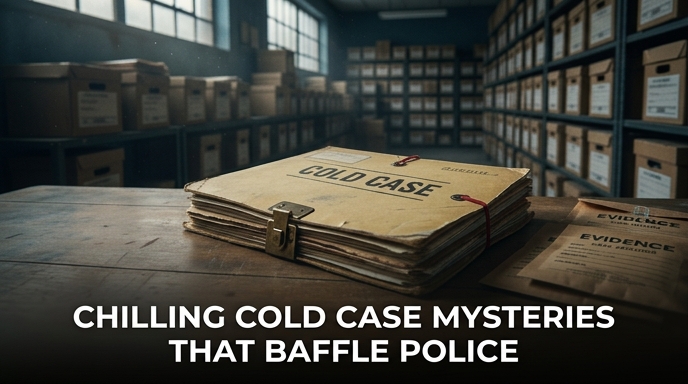
The world of crime holds dark records of baffling events that leave authorities bewildered. Many cold case mysteries remain significant unanswered questions for law enforcement officers and independent detectives around the globe. Some case files gather dust in police archives because no witnesses directly saw the events unfold. Furthermore, every detail of a crime scene often presents a new puzzle that proves difficult to solve. Despite decades passing, the victims’ families are still waiting for justice that has yet to arrive.
Modern investigators continue to rack their brains to piece together clues from the past. On the other hand, unsolved murder mysteries consistently spark the public’s curiosity. A dead-end investigation does not mean the case is simply closed forever. Therefore, advancements in modern technology are now opening new opportunities for forensic teams to revisit every valuable clue that may have been previously overlooked.
The Tragic Case of JonBenét Ramsey and the Black Dahlia Mystery
 The death of child beauty queen JonBenét Ramsey in late 1996 in Colorado is one of the famous cold case mysteries that captured international attention. Officers found the victim’s body in the basement of her own home just hours after a kidnapping report was submitted to the police. Subsequently, a lengthy and unusual ransom note sparked intense public debate. The public briefly suspected the victim’s family due to severe crime scene contamination during the early hours of the investigation.
Meanwhile, the murder of Elizabeth Short, famously known as the Black Dahlia, in 1947 in Los Angeles presented an equally chilling horror. The person who found the body saw the victim’s corpse cleanly severed in a vacant lot with no bloodstains at the scene. Detective teams interviewed hundreds of people, yet not a single piece of evidence convincingly pointed to a prime suspect. As a result, this criminal record remains one of the darkest archives ever handled by police in the United States.
The Boy in the Box Mystery and Advancements in Forensic Science
Tragedies from decades past were also recorded in Philadelphia when residents discovered the body of a young boy inside a cardboard box in 1957. For decades, the Boy in the Box case stood as a symbol of the long struggle against silent evidence. Officers distributed posters of the child’s face to millions of residents, but his identity remained tightly sealed. Nevertheless, this case demonstrated how vulnerable the search for facts was during an era before biological identification technology existed.
Interestingly, rapid advancements in forensic science managed to break through a thick wall of silence that endured for decades. Scientists successfully identified the boy’s name as Joseph Augustus Zarelli in late 2022 thanks to genetic genealogy techniques. Consequently, this case proves that decades old cold cases can still turn a new page when conventional methods hit a dead end. However, the killer behind the tragedy remains a major mystery for local police.
Real Obstacles in Police Investigations of Old Cases
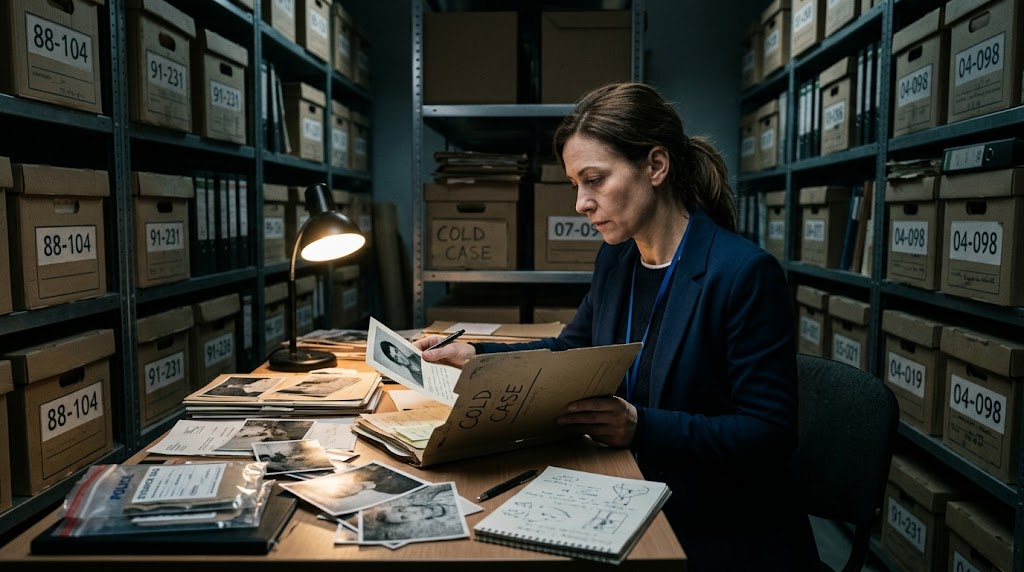
The police investigation process for past crimes often runs into the degradation of physical evidence stored for decades. Prior to the advent of cutting-edge forensic analysis, sample collection often failed to meet modern sterilization standards. Humidity or cross-contamination from investigating officers could easily destroy biological samples. Because of these conditions, extracting DNA evidence becomes a highly complex task requiring extra precision.
Furthermore, the passage of time leads to the loss of key witnesses who had direct knowledge of the events. Most eyewitnesses have advanced in age or even passed away before having the chance to provide additional statements. In addition, missing persons reports from earlier decades often lack sufficient identification data, such as dental medical records or complete fingerprints. Consequently, authorities must sift through thousands of physical archives with a high risk of misdirection when establishing the flow of the crime.
The Role of Modern Technology in Revealing New Clues
Law enforcement agencies such as the FBI continue to leverage international databases to match suspects’ genetic profiles with historical samples. Additionally, three-dimensional digital facial reconstruction technology now helps refresh the composite sketches of victims missing for years. This innovative approach sparks new public recollections that might recognize the victim’s physical features when they were alive. Thus, such approaches offer real hope for resolving unsolved cold cases that have sat abandoned for decades.
For instance, public participation through online sleuthing communities provides alternative perspectives for criminal analysts. The public frequently assists by examining public archive documents, historical maps, and old newspaper clippings in detail. Collaboration between law enforcement agencies and civil society analysts accelerates the process of uncovering previously overlooked facts. The hope of revealing the truth burns brightly for victims’ families who have long awaited justice.
A Ray of Hope for Delayed Justice
A string of cold case mysteries proves that time never erases the pain of a crime. However, the arrival of advanced forensic technology and the persistence of dedicated investigators now offer an antidote to past investigative failures. Every cold case file sitting in an archive cabinet deserves answers for the dignity of the victims and peace for the families left behind. Therefore, you can share this story with fellow crime mystery enthusiasts and share your thoughts in the discussion section regarding the cold case you most hope to see solved soon.
Q&A About Uncovering Cold Criminal Cases
What is the main factor that causes a criminal case to go cold?
The absence of valid physical evidence, a lack of eyewitnesses, and the limitations of forensic technology at the time of the event are the primary reasons police temporarily suspend an active investigation into a case.
How does genetic genealogy help solve old serial murders?
This method compares DNA samples from the crime scene against commercial family tree databases to find biological relatives of the perpetrator, thereby narrowing the circle of suspicion.
Why was the crime scene in the JonBenét Ramsey case so difficult to analyze?
Many relatives and family friends entered the victim’s home before police officers strictly secured the perimeter, thereby destroying or contaminating many original physical traces.
Can past murder case files simply be closed permanently by the police?
Murder cases generally do not have a statute of limitations in most jurisdictions. Therefore, police keep the case status open until they locate the perpetrator or establish that the perpetrator cannot legally stand trial.
What is the role of the general public in helping uncover long-standing missing persons cases?
The public can assist by providing family tree information, reporting potential physical feature matches through digital archival photos, and sharing updated facial reconstruction sketches on social media.