Infamous Serial Killers Never Caught in History
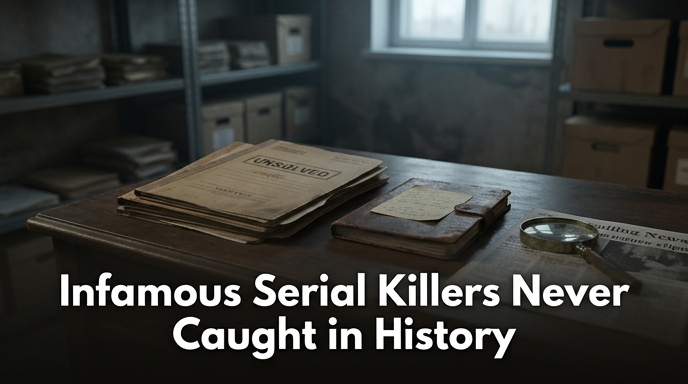
The world of crime holds dark mysteries that remain unsolved to this day. Despite major advancements in forensic technology, a surprising number of serial killers never caught managed to escape justice and evade law enforcement. These unidentified human predators executed their crimes with meticulous planning, exploiting loopholes in police investigations before vanishing without a trace. Their existence leaves behind cold case files and deep wounds for families who never received answers.
Psychologically, those who manage to escape often possess an extraordinary level of social adaptability. These perpetrators are able to blend into crowds without drawing any attention at all. As a result, police often face dead ends during their manhunts. Let us examine how technical errors by authorities, the clever tactics of the perpetrators, and media manipulation allowed some of these most terrifying figures to remain uncaptured.
Key Statistics & Notable Uncaptured Serial Killer Cases
To understand the scope of unidentified predators throughout criminology history, the following table summarizes real historical data and documented statistics on famous cases:
|
Serial Killer Alias |
Active Period |
Primary Location |
Estimated Victims |
Case Status & Notes |
|---|---|---|---|---|
|
Jack the Ripper |
1888 |
London, UK |
5+ |
Unidentified; canonical five victims in Whitechapel |
|
The Zodiac Killer |
1968–1969 |
Northern California, USA |
5–37+ |
Unidentified; communicated via unsolved ciphers |
|
The Phantom Killer |
1946 |
Texarkana, USA |
5 |
Unidentified; Texarkana Moonlight Murders |
|
The Doodler |
1974–1975 |
San Francisco, USA |
6–16 |
Unidentified; targeted victims in LGBTQ+ venues |
|
Cleveland Torso Murderer |
1935–1938 |
Cleveland, Ohio, USA |
12–20+ |
Unidentified; baffled lead investigator Eliot Ness |
Criminological Data on Unsolved Serial Murders
According to data compiled by the FBI’s Violent Criminal Apprehension Program (ViCAP) and the Homicide Accountability Project, tens of thousands of homicides in the United States remain unsolved. Statistical modeling by criminologists suggests that hundreds of active or past serial killers may have operated without ever being apprehended, taking advantage of inter-agency communication gaps and missing physical evidence.
The Legendary Mystery of Jack the Ripper and the Zodiac Killer
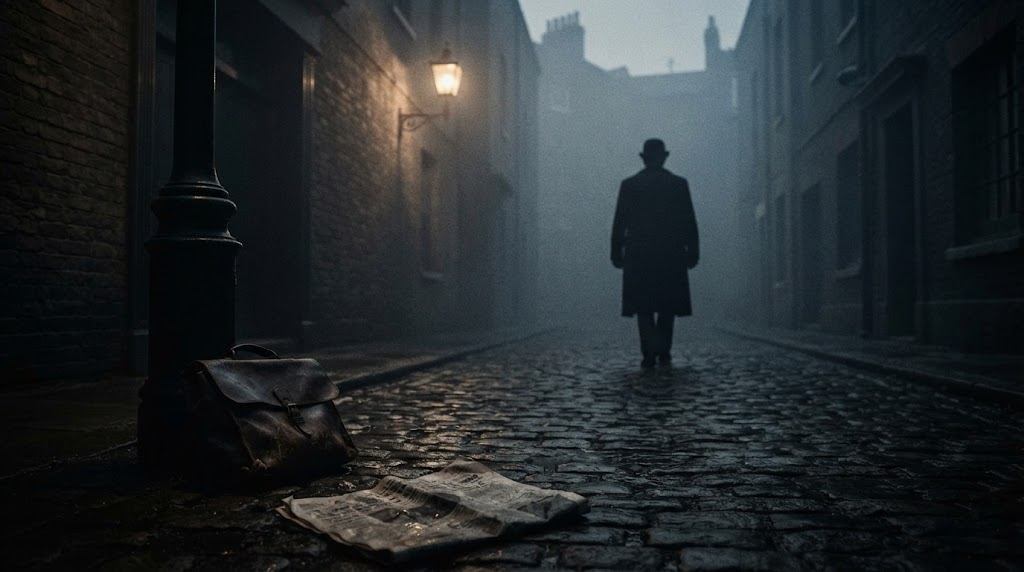
When speaking of famous serial killers never caught, the public naturally recalls the foggy streets of Whitechapel in London in the late nineteenth century. The figure of Jack the Ripper slaughtered at least five women with shocking surgical precision. Investigators of that era relied on highly limited manual methods. Furthermore, the lack of fingerprint forensics allowed the butcher to walk free after spreading terror.
Decades later, California was shaken by similar terror from a figure known as the Zodiac Killer. Interestingly, this killer actively taunted law enforcement through a series of anonymous letters containing complex ciphers. Although these letters were studied for decades, most of the codes remained a grand mystery. Authorities had actually released detailed police sketches based on eyewitness accounts. Unfortunately, miscommunication between police jurisdictions and failure in tracking alibis allowed this figure to walk free without ever standing trial.
The Traces of the Phantom Killer and the Phenomenon of Unidentified Serial Killers
The region of Texarkana in 1946 also recorded a dark history through the presence of the Phantom Killer. This burlap-masked figure targeted young couples in secluded areas on weekends. Police launched large-scale patrols, but the killer always stayed one step ahead. The serial murders eventually stopped abruptly without any official suspect being charged. The Texarkana Moonlight Murders case became an early example of how difficult it is to track a perpetrator who leaves no personal motive toward the victims.
The list of unidentified serial killers continued to grow entering the modern era. One perplexing example in the world of criminology was the Long Island Serial Killer case before a new investigation finally yielded results years later. During the initial investigation, detectives faced fatal internal coordination obstacles. Such technical hurdles gave unidentified suspects time to erase digital and physical tracks.
Investigative Loopholes and the Clever Modus Operandi of Perpetrators
The key reason behind law enforcement’s failure to capture serial criminals often stems from a dynamic modus operandi. Most master predators intentionally alter their victim selection patterns to obscure the criminal profiling constructed by police experts. If the psychological profile created by authorities is off target, the focus of the manhunt will be directed toward the wrong individuals.
In addition, changing crime scene locations at random poses a major challenge for cross-jurisdictional coordination. Perpetrators frequently cross police jurisdictional boundaries with differing record-keeping systems. Meanwhile, the lack of eyewitnesses and the limitations of degraded DNA samples in cold cases further narrow detectives’ options. Ultimately, bureaucratic weaknesses and situational luck often side with these cold-blooded killers.
The Real Threat of Active Serial Killers Today
Many people assume that unsolved serial murder cases belong exclusively to the past. In fact, several active investigations are still underway to track suspected active serial killers roaming the streets of major cities worldwide. Modern criminologists have discovered patterns of mysterious deaths with similar characteristics spread over long periods of time.
This condition shows that the threat of systematic crime still genuinely looms over society. Modern criminals are now much more vigilant regarding advancements in surveillance technology and DNA forensic testing. Perpetrators study crime scene processing procedures to minimize physical evidence left behind. Public awareness and police transparency serve as the primary defense in preventing further loss of life.
Final Reflection on Endless Criminal Mysteries
The dark tales regarding the line of serial killers who were never caught prove that the criminal world holds anomalies that are hard to resolve. The failure to catch them is not merely a matter of the perpetrators’ intelligence, but also a reflection of the limitations of science and legal coordination in their era. The terror they left behind serves as a valuable lesson for the development of modern criminology today. If you enjoy deep dives into real mysteries, begin exploring other cold case archives and share your views in the comments section to discuss the latest investigative theories.
Discussion and Exploration of Criminal Mysteries
Who are the most famous serial killers who were never caught by authorities?
Jack the Ripper and the Zodiac Killer are the most famous examples in world criminal history. Both managed to evade capture due to the limitations of forensic evidence and their ability to outsmart police investigations.
Why did police struggle so much to identify serial killers in the past?
Key challenges in the past included the absence of DNA analysis technology, underdeveloped centralized fingerprint databases, and weak coordination among cross-regional police agencies.
Are there still unidentified serial killers actively roaming today?
Based on criminological data and periodic police reports in several countries, there are a number of patterned murder cases that remain under active investigation and are suspected to involve uncaptured serial killers.
How do serial criminals evade the criminal profiling process?
Perpetrators frequently alter their attack patterns, choose random locations, target victims with no emotional connection, and adapt their behavior to appear normal in everyday social interactions.
Can modern DNA analysis solve old serial murder cases?
Modern genetic genealogy methods have proven successful in solving several decades-old cold cases. However, this method still requires intact, original DNA samples preserved properly from the crime scene.