
Why Unsolved Crime Cases Continue to Haunt Us
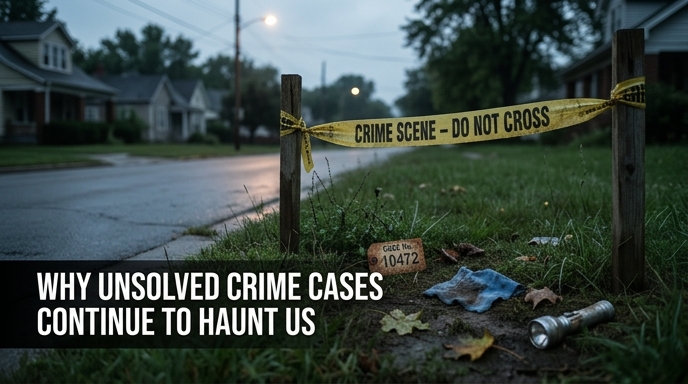
Many stories eventually find a clear ending. However, unsolved crime cases leave a lingering sense of unease. True crime enthusiasts often find themselves drawn to these dark puzzles. A single missing piece of evidence can stall an investigation indefinitely. Detectives work tirelessly to connect the dots. Sometimes, the trail goes cold despite their best efforts. We naturally seek closure in every narrative. The absence of a final verdict creates a persistent void in the public consciousness. Communities remember victims long after the headlines fade. Law enforcement agencies never truly close the book on these events. They wait for new leads to emerge. Fresh perspectives can sometimes reignite lost hope. Therefore, time adds complexity to the search for truth.
The Psychology Behind Our Morbid Fascination
People often wonder why society fixates on unresolved mysteries. First, human brains are wired to solve problems. We experience psychological tension when a narrative lacks a definitive conclusion. This cognitive friction keeps unsolved crime cases active in various online forums. Amateur sleuths dedicate countless hours to reviewing publicly available case files. They hope to spot a minor detail that professionals might have missed. Consequently, the desire for justice fuels ongoing discussions.
Furthermore, these dark stories serve as important cautionary tales. Individuals learn to navigate a dangerous world by analyzing past tragedies. The sheer unpredictability of these events terrifies and fascinates us simultaneously. Nobody wants a perpetrator walking free. As a result, public pressure often forces authorities to re-examine old evidence. Media coverage helps maintain this momentum. Documentaries and podcasts regularly introduce these mysteries to completely new generations.
Key Factors That Hinder Investigations

Every investigation begins with a critical window of opportunity. Detectives usually have about forty-eight hours to establish a solid lead. The probability of an arrest drops significantly after this initial timeframe. First responders must secure the area immediately to preserve scene integrity. Sadly, severe weather can destroy fragile clues before teams arrive. Witnesses might also struggle to recall accurate details under immense emotional stress.
Another major obstacle involves jurisdictional challenges and resource limitations. Small police departments sometimes lack the budget for highly advanced lab testing. Physical evidence can degrade quickly if officers do not store it correctly. Moreover, suspects frequently cross state lines to evade capture. Investigators must coordinate across multiple different agencies to build a cohesive timeline. This complicated logistics network sometimes slows down the entire legal process.
|
Barrier Type |
Primary Cause |
Impact on Case |
|
Environmental |
Severe weather |
Destroys evidence |
|
Human Error |
Poor preservation |
Voids legal proof |
|
Financial |
Low department budget |
Delays lab testing |
How Modern Science Meets Classic Mysteries
Technology has changed how we approach historical mysteries. Old storage boxes hold hidden secrets waiting for the right modern tool. Investigators now view decades-old material through a completely new scientific lens.
Advanced DNA Profiling Techniques
Genetic material remains a powerful tool for detectives. Previous generations could only determine basic blood types from active crime scenes. Now, scientists can extract complete genetic profiles from microscopic trace elements. Then, they compare these detailed profiles against massive national databases. This exact process has successfully identified unknown victims from the previous century. Additionally, investigators can rule out false suspect theories with certainty.
The Rise of Genetic Genealogy
This specialized field combines traditional historical research with modern genetic science. Experts build extensive family trees using publicly accessible ancestry data. Next, they trace distant relatives to narrow down the overall suspect pool. Consequently, investigators can pinpoint a specific family branch. They then use conventional detective work to find the actual living perpetrator. This innovative method has successfully resolved several high-profile mysteries very recently. It brings long-awaited answers to grieving families.
Frequently Asked Questions About Cold Cases
What exactly defines unsolved crime cases today?
These events remain open because police lack sufficient proof to charge anyone. Detectives classify a case as cold when all active leads are completely exhausted. They usually transfer the files to a specialized unit for occasional future review.
How do police restart cold case investigations?
Authorities usually reopen a file when new forensic evidence surfaces. A previously silent witness might also come forward with fresh, verifiable information. Sometimes, a leadership change prompts a review of old records.
Can the public actually help solve mysteries?
Online communities occasionally provide highly valuable tips to local law enforcement agencies. They excel at digitizing old public records and maintaining widespread general awareness. However, professionals must carefully verify any crowdsourced information to avoid compromising the legal investigation.
The Ongoing Quest for Truth and Justice
The long journey to solve a lingering mystery requires immense patience and unwavering dedication. Detectives carry the heavy weight of these unanswered questions throughout their entire careers. They understand that behind every dusty file sits a family waiting for closure. Technological advancements will undoubtedly continue to shrink the shadows where guilty parties hide. We must support efforts to fund specialized forensic laboratories.
Every single piece of shared information keeps the memory of the victims alive. Society plays an active role in demanding accountability for these tragedies. The steadfast pursuit of justice does not expire with the simple passage of time. Future scientific breakthroughs will likely illuminate the darkest corners of our shared history. Until then, we must keep asking the hard questions and demanding honest answers.